

Hand Pollination: The Squash Vine Borers Made Me Do It
Updated: Sep 30, 2025
I used to think pollination was something I could leave to the professionals — you know, bees, wasps, wind. And for the most part, that’s true. Plants are good at being plants. But as with most things in the garden (and life), sometimes we’ve got to step in when the usual systems break down.
So now, hand-pollination is part of my morning routine. It’s simple but deliberate — a soft-bristled brush, a few quiet minutes, a tiny act of faith that this will all be worth it.
In this post, I’m sharing exactly how I hand-pollinate, why it matters (especially under row cover), what cross-pollination is and what it can do to your crops — plus a few tips I’ve learned along the way. Whether you’re battling bugs, learning the ropes, or just love a peek into someone else’s messy garden life, I hope you’ll feel right at home here.
Let’s get into it...
The Why + The How
I spent two long and heartbreaking summers trying to grow squash while fighting squash vine borers (SVBs). They absolutely destroyed my plants. I tried every organic pesticide from diatomaceous earth, to BT (Bacillus thuringiensis), to neem oil. I tried proactive measures. I tried reactive measures. I tried crying about it. None of it worked.
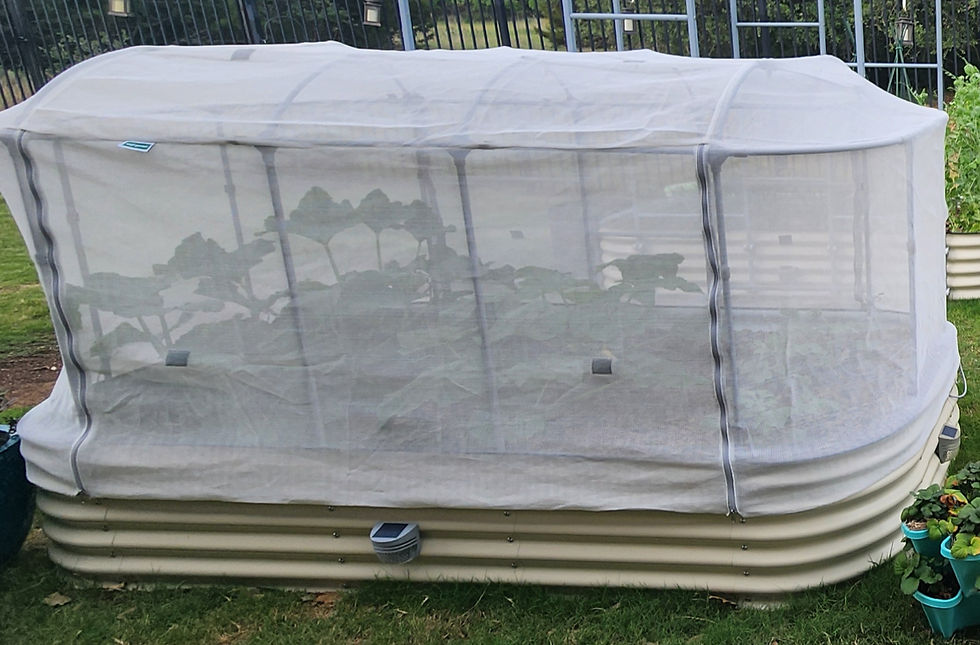
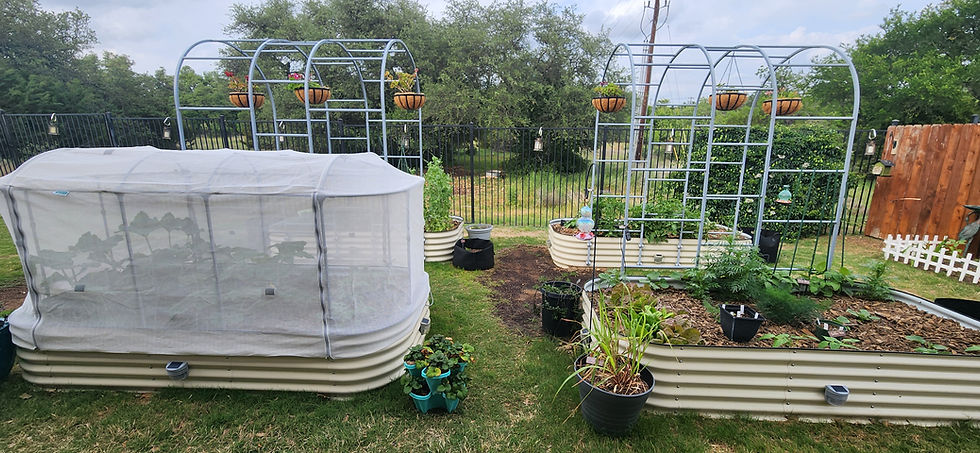
This season, I finally did what had to be done: I covered my squash bed with a bug net and so far, it keeps the pests out beautifully... but it also blocks the pollinators. Which means if I want zucchini on the table, I’ve got to play pollinator myself.
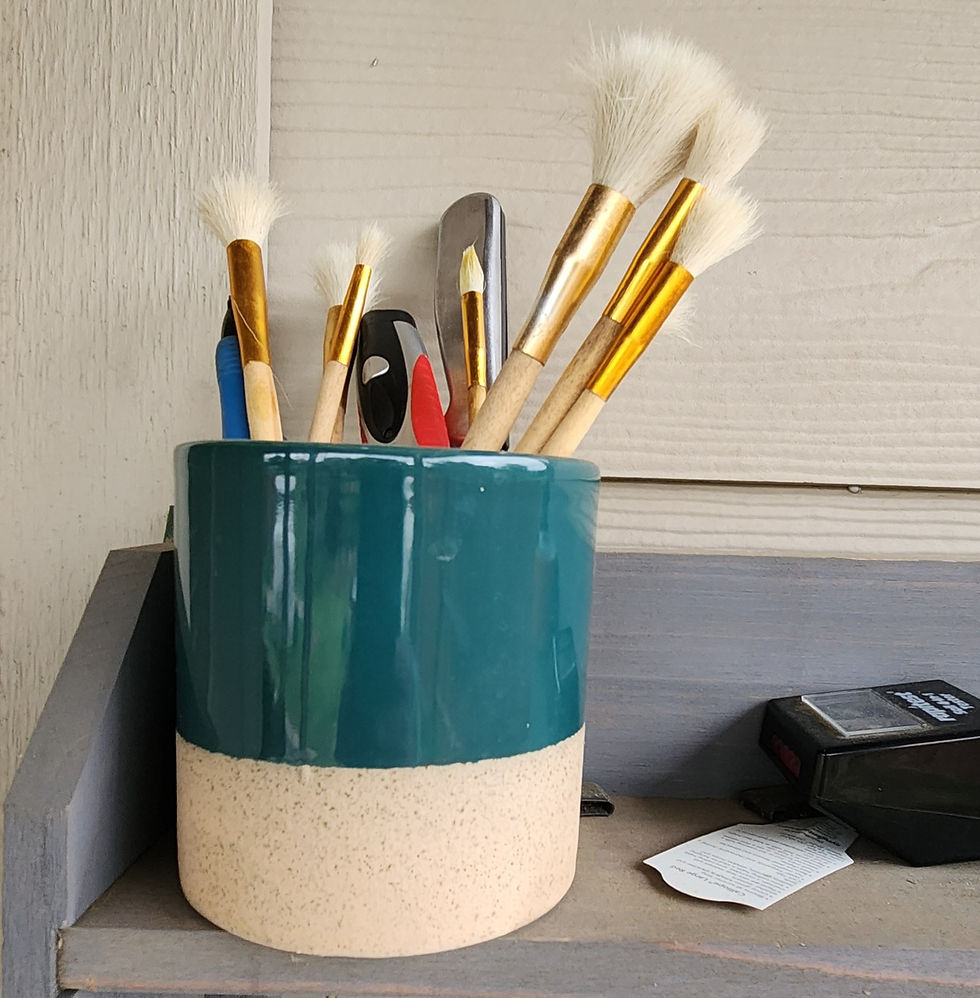
I purchased a very inexpensive set of pollinator brushes (a set of 8 for under $10). I keep them in an old flower pot on my potting bench so they are ready to go when I need them. Any small paint brush will do but natural bristles are a must. The hairs are porous which promotes pick up and transfer of the pollen. Whereas synthetic bristles are usually slick and non-porous, preventing pollen from adhering to the brush. A cotton swab also works but I am really trying to stick with reusable options that won't end up n a landfill. However, use what you have on hand, no judgment here.
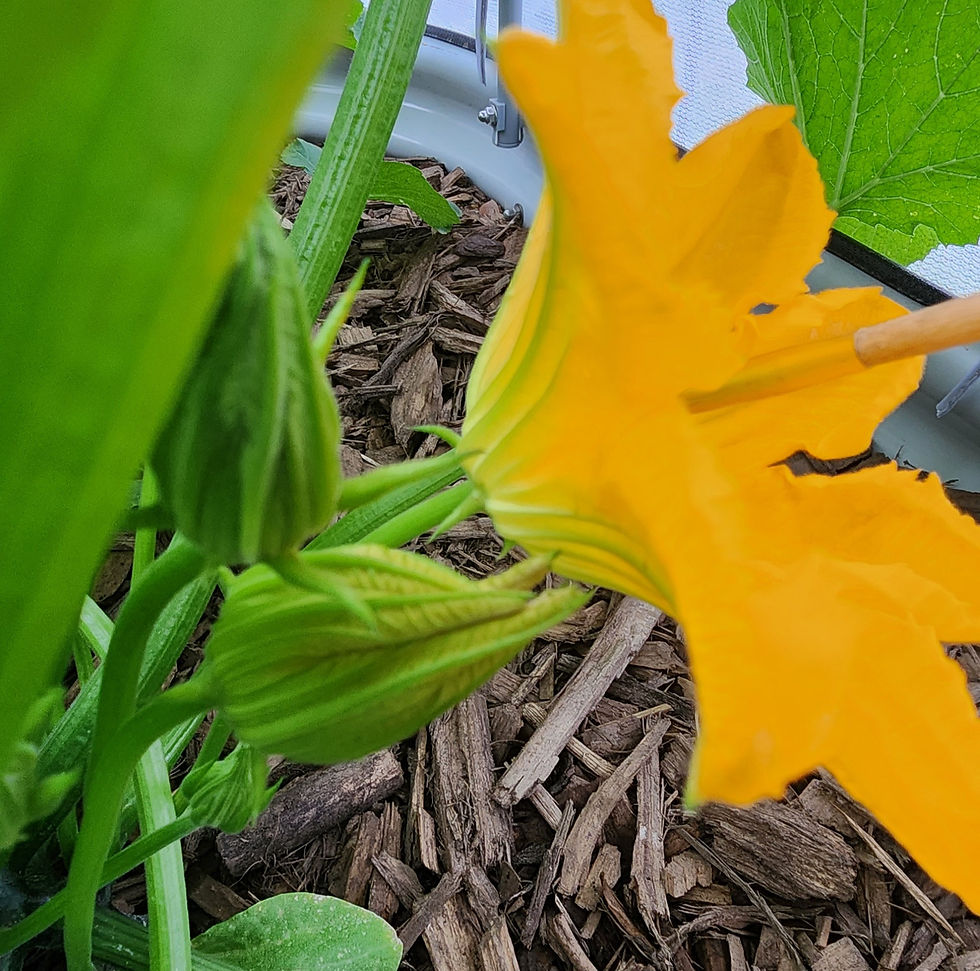
The first step in hand pollinating is to identify the male and female flowers. The male flowers are typically connected to a stem while the female flowers are at the end of a 'fruit' or in this case, a vegetable since we are talking squash. In the photo below is a male flower. It is attached to a stem and no squash is in sight. I am taking pollen from the zucchini blossom and will be transferring it to a female yellow squash. Transferring from one type of squash to a different type is known as cross-pollination, which I will talk about later in this blog entry.
Once the brush is loaded with pollen, it's time to identify the female flowers and transfer the pollen.
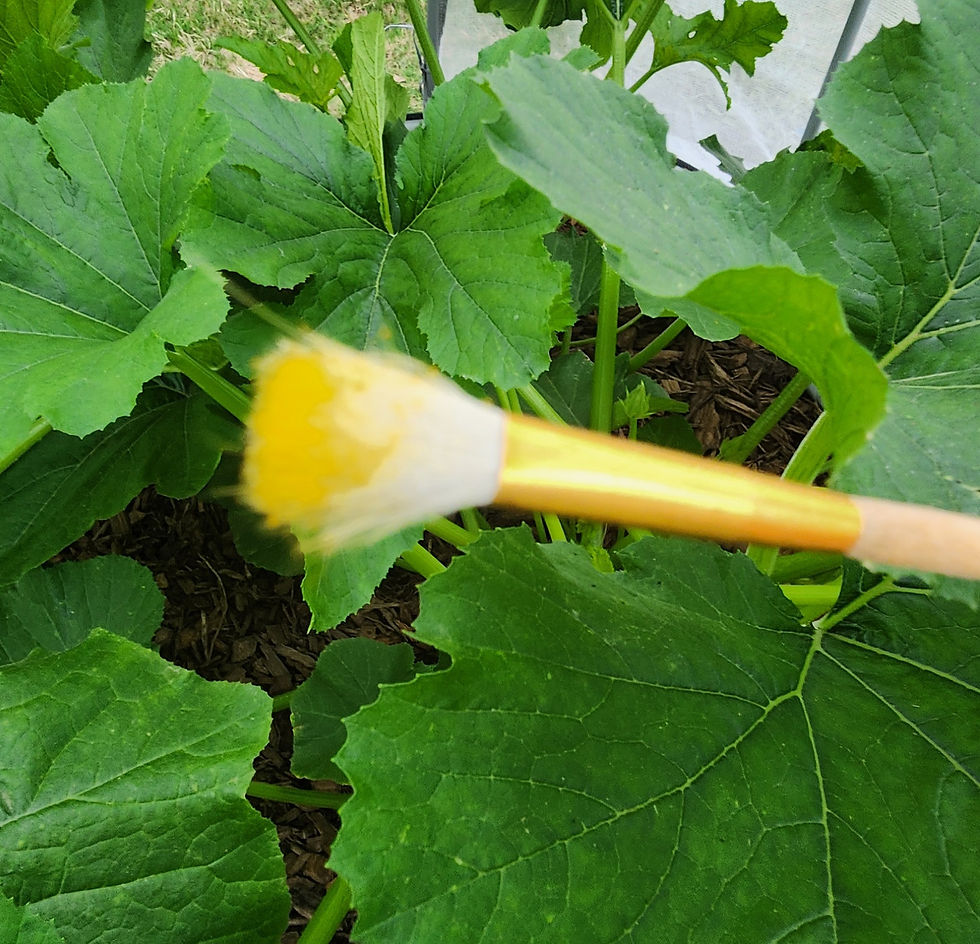
Carefully transfer the pollen to the female flowers, taking care not to bump the brush and knock all that lovely pollen off before the transfer.
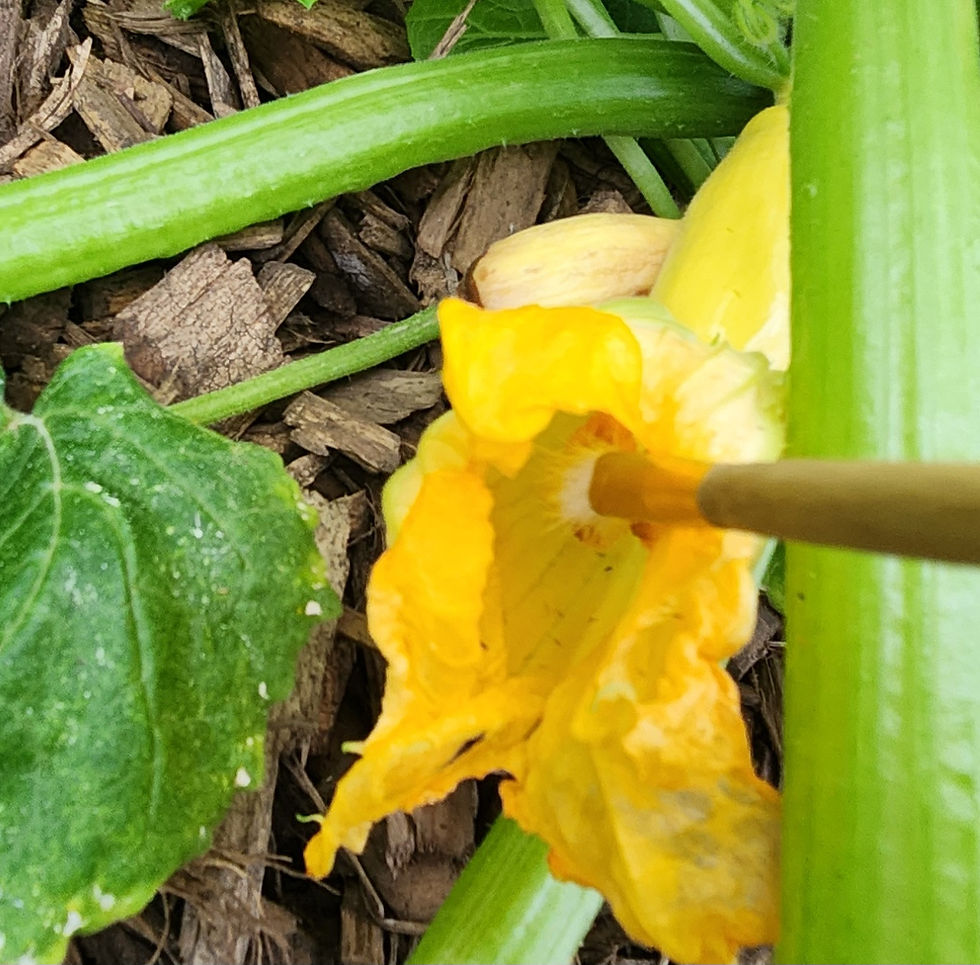
...and that's it. Repeat until all your female flowers have been pollinated then do it all again tomorrow.
Cross-Pollination Can Give You Franken-Squash
Now, to address the cross-pollination, why I did it and why it won't be a problem for me...
Why I did it...
My yellow squash is only producing females at the moment and my zucchini only producing males. The male flowers only bloom once then wilt the next day, essentially going to waste until the plants also produce zucchini females. The yellow squash fruit will not survive if not pollinated so I am using what is available to ensure my yellow squash will thrive until the plants begin to produce their own male flowers. Typically the male flowers appear first but sometimes God likes to remind us he has a sense of humor, to rejoice at the beauty in the chaos, and pivot as needed. He's provided everything we need, maybe just not in the way we expected. Same with life, really.
You can see an example of an unpollinated fruit in the photo above. If you look closely, there is a pale yellow squash with brown on the tip. That squash was not pollinated so it will wilt and rot away. However, I do not count it as a loss. That fruit will compost into the soil and provide additional nutrients to the plant. But I digress and composting is a topic for another blog.
Why it won't be a problem...
Cross-pollinating is not an issue in this case for the following reasons:
The bees and other natural pollinators would have done the same. Cross-pollination happens in nature. Bees are incredibly organized but not that organized. They will hop from plant to plant with not one single thought about species. Another example of beauty in chaos.
Cross-pollination won't affect the fruit until next year. If I harvest the seeds from this year's plants, I will end up with a yellow squash/zucchini hybrid. But, I am not planning to harvest any seeds from this year's squash so there will be no strange hybrid squash in my future.
Story time: I actually did plant some seeds that were a yellow squash/acorn squash hybrid. It looked like a yellow squash with a tiny lime green acorn squash at the tip. The texture was like yellow squash with a slightly sweet acorn squash flavor. They were weird but delicious.
If you do decide to harvest seeds from cross-pollinated squash please do your research before growing and consuming. There are some who say hybrids, especially squash, can be poison and can make you sick. I did not know this before I ate the hybrids I grew. Fortunately, I didn't have any issues but please be aware if you try it yourself.
Fruitful Thoughts to End On
Hand-pollination might not be the most glamorous part of gardening, but there’s something kind of sacred about it — slowing down, noticing the details, partnering with creation in a really tangible way. It’s one of those quiet chores that teaches more than it asks: patience, presence, and the reminder that sometimes the fruit only comes when we’re willing to show up and help it grow.
Whether you’re here for the gardening tips, the bug drama (have I mentioned how much I hate squash vine borers?), or just the reminder that you’re not the only one figuring it out as you go — I’m glad you stopped by. May your squash thrive, your mornings be gentle, and your brush always find the right flower.
If you try hand-pollinating (or have questions), I’d love to hear from you in the comments. Or just tell me what’s blooming (or flopping) in your garden lately — all of it’s welcome here. You're also invited to come find me on Instagram @iamcozychaos.
Until next time: Tend what matters, release what doesn’t, and let the rest be beautifully messy.
Buzzing off for now,
Jamey

Comments